
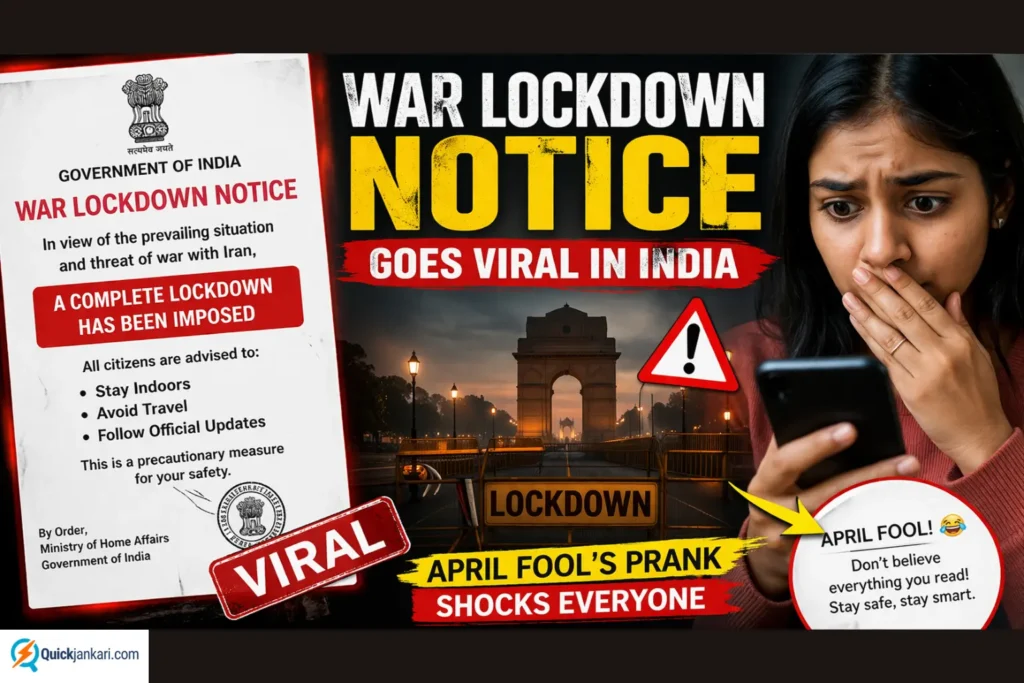
A viral War Lockdown Notice claiming an emergency situation in India left thousands of people shocked and confused on social media. The message, which appeared highly official, suggested that a lockdown had been imposed due to a war-like situation. However, the reality turned out to be very different.
This incident clearly shows how quickly unverified information can spread online and why people should always confirm facts before reacting or sharing.
What Was the Viral War Lockdown Notice?
The viral document was designed in a way that made it look completely real. It used a formal format, serious language, and even included the Ashok Chakra emblem, which increased its credibility.
The message claimed that a War lockdown in India notice had been issued and advised citizens to stay indoors immediately. Due to its urgent tone, many users believed it without questioning its authenticity and started forwarding it across different platforms.
At first glance, the notice looked genuine enough to create panic among people.
Also Read: Zolve Global Scholarship 2026
Lockdown in India: What Did the Notice Claim?
The circulating message created a sense of fear by suggesting that a war-related emergency had led to a nationwide lockdown. It instructed people to take precautions and remain inside their homes.
Because of its professional layout and serious wording, many assumed it was an official government advisory. This is why the message spread rapidly and reached a large number of users within a short time.
The lack of verification only added to the confusion, as people reacted quickly instead of checking the source.
The Truth Behind the War Lockdown Notice
When users opened and read the full document, the truth became clear. The final section of the message revealed that it was not an official notice at all.
Instead, it ended with a simple April Fool’s message along with an emoji, exposing the entire thing as a prank.
This unexpected twist caught many people off guard, especially those who had already shared the message thinking it was real.
Why Did the Message Spread So Fast?
There were a few key reasons why this War Lockdown Notice went viral so quickly:
- The message appeared on April Fools’ Day, when prank content is commonly shared
- Its official-looking format made it seem authentic
- The serious tone created urgency and fear
- People forwarded it without verifying the source
All these factors combined made it easy for the message to spread rapidly across social media platforms.
No Official Lockdown Announcement
It is important to note that there has been no official confirmation of any lockdown related to a war situation.
No authority has issued any advisory that matches the claims made in the viral notice. The entire message was simply a prank designed to mislead people.
Lesson From This Viral Incident
This incident highlights how easily misinformation can spread, especially when it is presented in a convincing format.
Even on occasions like April Fools’ Day, such messages can create real panic if not identified in time.
People are strongly advised to:
- Always verify information from official sources
- Avoid forwarding unconfirmed messages
- Take a moment before reacting to viral content
Source Of the Article:- The Economics Time News
Conclusion
What appeared to be a serious War Lockdown Notice turned out to be nothing more than an April Fool’s prank. Despite this, it managed to create confusion and fear among many users.
This situation serves as a reminder that not everything seen on social media is true. Staying alert and verifying information is the best way to avoid falling for such misleading messages.

Sam is a dedicated scholarship writer who helps students find genuine financial aid opportunities. He explains eligibility, benefits, and application steps in simple English so students can easily apply without confusion. His goal is to make quality educational support easier to access for everyone.